Statement on the Government's Social Care Reform Announcement
Demand for health and care services continues to rise, with NHS organisations, local authorities and voluntary sector partners supporting growing numbers of people with increasingly complex needs. Alongside our partners at the Association of Directors of Adult Social Services (ADASS), we have highlighted for many years the impact of delayed reform, rising demand, rising costs and an ageing population, making action in this area increasingly urgent.
MIAA has extensive experience supporting organisations across the North West with All Age Continuing Care (AACC) services, helping strengthen compliance, improve patient outcomes, optimise care and ensure value for money. Through this work, we have developed a detailed understanding of the pressures facing health and care systems, including the challenges of rising demand, workforce constraints and increasing financial pressures across both the NHS and local government.
Prime Minister’s statement on social care
The Prime Minister’s statement today, began by recognising the strengths of the social care system, including the quality of care provided and the skills and professionalism of staff. He then set out the urgency of reform, describing the current delivery of care as a “lose-lose situation” in which vulnerable people face long waits in A&E and delays to discharge once admitted.
He also acknowledged the pressure this places on the NHS and its staff, noting that around 3,000 people a day are receiving corridor care because of capacity constraints, alongside the impact of staff burnout. As he stated: “Social care is linked to the NHS; it does not exist in a silo.”
Key announcements
The Prime Minister made three major announcements:
- Accelerating the Baroness Casey review: bringing the review forward by a year to reflect the urgency of the challenge.
- Creating a national care service: developing an integrated, person-centred system with a stronger preventative focus, designed to help keep people out of hospital, improve discharge pathways and support home care. Alongside strengthening the social care workforce, building on the fair pay agreement for social care staff, with the review considering wider reform, including closer alignment with NHS standards, training and career progression routes, to create a more joined-up health and care workforce.
- Opening cross-party talks: seeking common ground and a lasting consensus on social care reform.
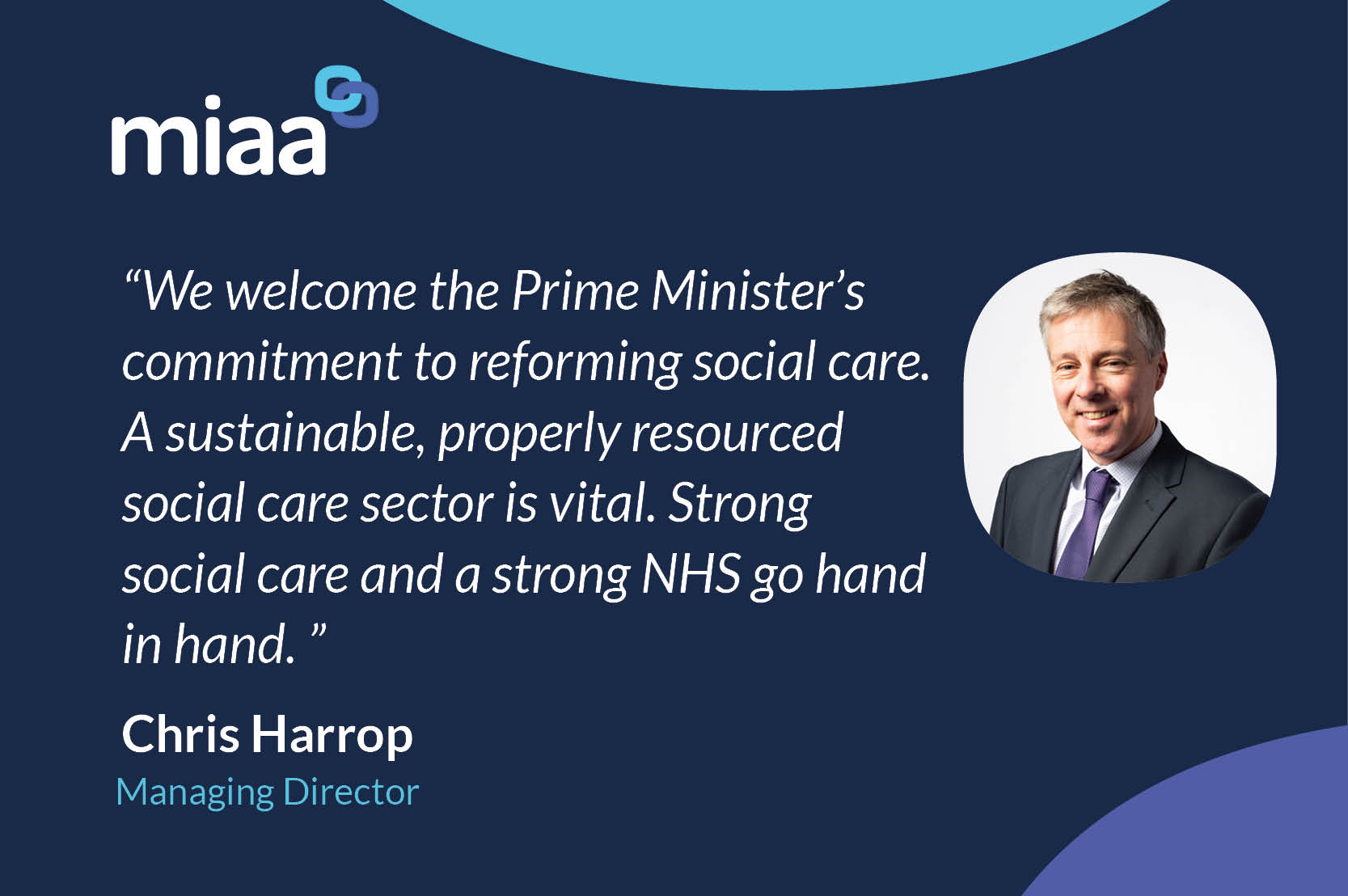
Chris Harrop, MIAA's Managing Director, commented:
"We welcome the Prime Minister's commitment to reforming social care and the recognition that it is fundamental to the entire population. A sustainable, properly resourced social care sector is vital to helping people live independently, with dignity and the right support in their communities. Strong social care and a strong NHS go hand in hand. Sustainable reform is essential to improving outcomes for patients, supporting independence, and reducing pressure across the wider health and care system. We look forward to working with our partners in health and social care to continue improving services for our population."